


SIL Silicone FDA Food Grade Sealing Ring EPDM/FKM/NBR/VITON/AFLAS/HNBR
Contact Info
- Add:苏州市工业园区科能路80号, Zip:
- Contact: 任勇刚
- Tel:1505103097
- Email:yongxinkeji001@126.com
Other Products


SIL Silicone FDA Food Grade Sealing Ring EPDM/FKM/NBR/VITON/AFLAS/HNBR
The materials for O-rings produced by the company include rubber O-rings, carboxyl nitrile O-rings, fluoroelastomer O-rings, ethylene propylene rubber O-rings, hydrogenated rubber O-rings, silicone rubber O-rings, neoprene O-rings, fluorosilicone rubber O-rings, polyurethane O-rings, chlorohydrin rubber O-rings, styrene-butadiene rubber O-rings, and butyl rubber O-rings.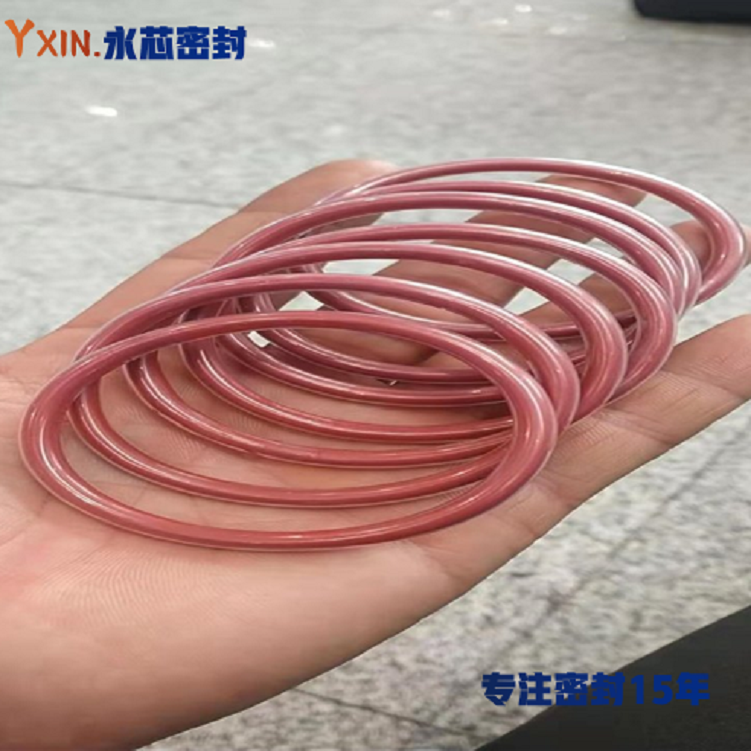
 2000
2000
O-rings (also known as O-rings, O-rings, O-rings) are ring-shaped mechanical gaskets, which are annular elastomers with a circular cross-section. They are usually fixed in a groove and compressed by two or more components during assembly, thus creating a sealed interface. Because of their low cost, simple manufacturing, reliable function, and simple installation requirements, O-rings are common mechanical designs for sealing. They can withstand pressures of several tens of Pascals (thousands of pounds). O-rings can be used in static applications as well as in dynamic applications where there is relative movement between components, such as the shaft of a rotary pump and the piston of a hydraulic cylinder.
Rubber O-rings are mainly used to manufacture oil-resistant rubber products. The acrylonitrile content (%) in rubber O-rings includes five types: 42–46, 36–41, 31–35, 25–30, and 18–24. The higher the acrylonitrile content, the better the oil resistance, but the corresponding cold resistance decreases. It can be used in air at 120°C or in oil at 150°C for long periods. In addition, it also has good water resistance, air tightness, and excellent bonding properties. It is widely used in the manufacture of various oil-resistant rubber products, various oil-resistant gaskets, spacers, sleeves, soft packaging, soft hoses, printing and dyeing rubber rollers, cable rubber materials, etc. It has become an elastic material in industries such as automotive, aviation, petroleum, and photocopying.
NBR rubber O-rings have excellent oil resistance. The typical NBR structure has about 78% trans configuration. Because the molecular chain structure of NBR rubber O-rings contains cyano groups, their oil resistance (such as resistance to mineral oil, liquid fuels, animal and vegetable oils, and solvents) is better than that of natural rubber, neoprene, and styrene-butadiene rubber. Compared with other rubbers, NBR has a wider range of use temperatures. Its long-term use temperature is 120°C, and NBR rubber O-rings also have good low-temperature resistance, with a glass transition temperature as low as -55°C.
NBR rubber O-rings have good chemical stability and processing performance. As the acrylonitrile content in their structure increases, the relative density increases, the vulcanization speed accelerates, and the tensile strength performance improves, but the rebound performance decreases and the cold resistance becomes worse. Because the cyano groups in NBR rubber O-rings are easily polarized by electric fields, the dielectric properties decrease, making them semiconductor rubbers. NBR rubber O-rings can be divided into five categories based on ACN content: ultra-high, high, medium-high, medium, and low acrylonitrile. The production methods are divided into continuous and intermittent polymerization. Continuous polymerization is usually used for small varieties and large production volumes, with low consumption. Intermittent polymerization is suitable for multiple varieties and small batch production, with high engineering consumption. Although rubber has excellent physical mechanical properties and processing performance, its long-term performance in acidic gasoline and high temperature (150°C) environments is not as good as that of fluoroelastomer and acrylate rubber. For this reason, hydrogenated rubber (HNBR) with excellent performance has been developed. In addition, rubbers with extremely ultra-low temperature resistance and high purity rubber, as well as carboxyl rubber (XNBR), have also been developed.
Rubber O-rings are light brown elastomers with a molecular weight of about 700,000. Due to the strong polar CN group, they have excellent stability against aliphatic hydrocarbon oils and gasoline. They are classified according to ACN content:
High rubber: ACN content 36%–42%
Medium-high rubber: ACN content 31%–35%
Medium rubber: ACN content 25%–30%
Low rubber: ACN content below 24%
Rubber O-rings have good heat resistance. Their heat resistance is better than that of natural rubber and styrene-butadiene rubber. The long-term use temperature can reach 100°C, and they can be used at 120°C for 40 days. [1]
① The ozone resistance of O-rings is worse than that of CR but better than NR.
② O-rings are reinforced to give the rubber better physical mechanical properties and wear resistance.
③ When the acrylonitrile content of the rubber is 39%, the air tightness is comparable to that of IIR rubber, and the air tightness is good.
④ The low-temperature flexibility of O-rings is average.
⑤ O-rings have excellent anti-static properties.
⑥ O-rings use polar esters for better plasticizing effects.
⑦ O-rings have good compatibility with polar substances, such as PVC, alkyd resins, and nylon.
⑧ O-rings have low self-adhesion and generate more heat during the mixing process.
Excellent oil resistance
Rubber O-rings are one of the excellent rubbers with comprehensive properties such as oil resistance, physical mechanical properties, and chemical resistance. Making effective use of these characteristics can meet various applications. Among general-purpose rubbers, NBR rubber's resistance to benzene, petroleum-based oils, and non-polar solvents is far better than that of non-polar rubbers such as NR, SBR, and IIR, and also better than the polar CR. However, the performance of rubber against polar solvents and polar oils is not good enough.
| Industry Category | Chemicals/Chemical Intermediates/Intermediate Compounds |
|---|---|
| Product Category | |
| Brand: | 永芯密封 |
| Spec: | YX05D |
| Stock: | 40000 |
| Manufacturer: | 苏州永芯 |
| Origin: | 113205 |


